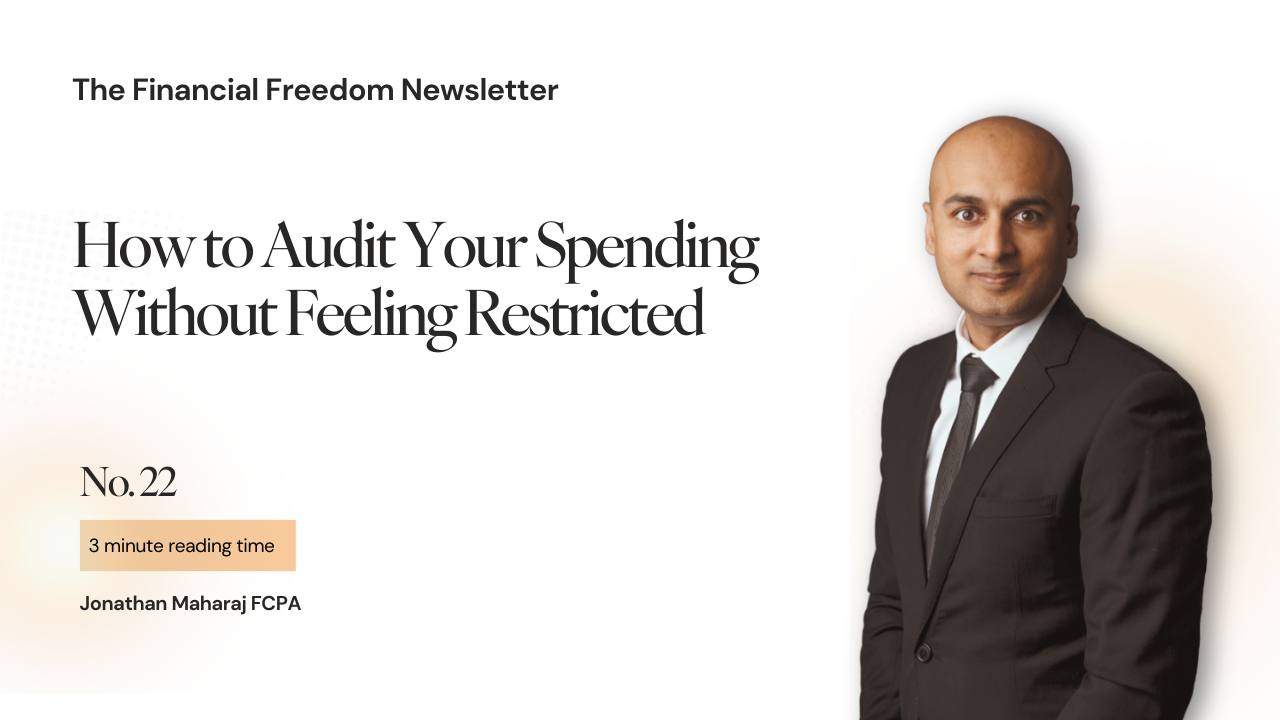
For many people, the idea of looking closely at their spending creates immediate resistance.
It feels uncomfortable because there’s a fear that scrutiny will lead to limitation.
Most of us were introduced to money through rules and restrictions, not understanding.
A spending audit done thoughtfully works very differently.
Why Spending Reviews Often Feel Heavy
Traditional budgeting approaches often focus on control. They tell you what to cut, what to limit, and where you went wrong.
Over time, that creates tension. When every decision feels monitored, motivation fades and old habits return.
A spending audit is meant to do something else entirely.It creates awareness and awareness tends to reduce stress, not increase it.
When you understand where your money is going, decisions become calmer and more deliberate.
What a Spending Audit is Really For
The purpose of reviewing spending is not to eliminate enjoyment or convenience but to understand which expenses support your life and which ones quietly drain energy and progress.
Most people discover that their spending patterns are uneven.There are areas that genuinely add value, areas that are necessary, and areas that exist largely out of habit or stress.
Once those patterns become visible, change feels less forced.You stop trying to overhaul everything and focus on a few meaningful adjustments.
That is why this process works when it is done with curiosity instead of judgment.
A Simple Way to Review Spending
You do not need an advanced system or perfect categorisation. What matters more is honesty and consistency.
Start by reviewing the last one to two months of transactions.Then group expenses into three broad categories:
- Spending that adds value to your daily life
- Spending that is necessary but emotionally neutral
- Spending that feels draining or forgettable after the moment passes
This framework removes guilt from the process and helps you notice patterns.
Patterns are what lead to change.
Action Plan
- Gather recent transactions.
Include bank accounts and credit cards so nothing is overlooked. - Identify a small number of draining expenses.
Focus on what stands out, not on fixing everything. - Adjust rather than eliminate.
Reducing frequency or setting limits is often more sustainable than cutting entirely. - Leave room for what matters.
Spending that genuinely improves your quality of life should be protected. - Review once a month.
Regular check-ins encourage progress without creating pressure.
Clarity Changes the Relationship With Money
Financial progress comes from understanding your own behavior and responding thoughtfully.
When spending becomes visible, it stops feeling like something that controls you.
It becomes a tool you can use intentionally.
That shift brings relief and over time, it creates momentum.
That’s all for this week.
See you on Friday!
– Jonathan
P.S. Want help reviewing your spending and deciding what to adjust first? Reach out to me – I’ll guide you.
Disclaimer: This newsletter is general information only and is not financial advice. Always do your own research and consult a professional about your circumstances.
